Hardware Overview
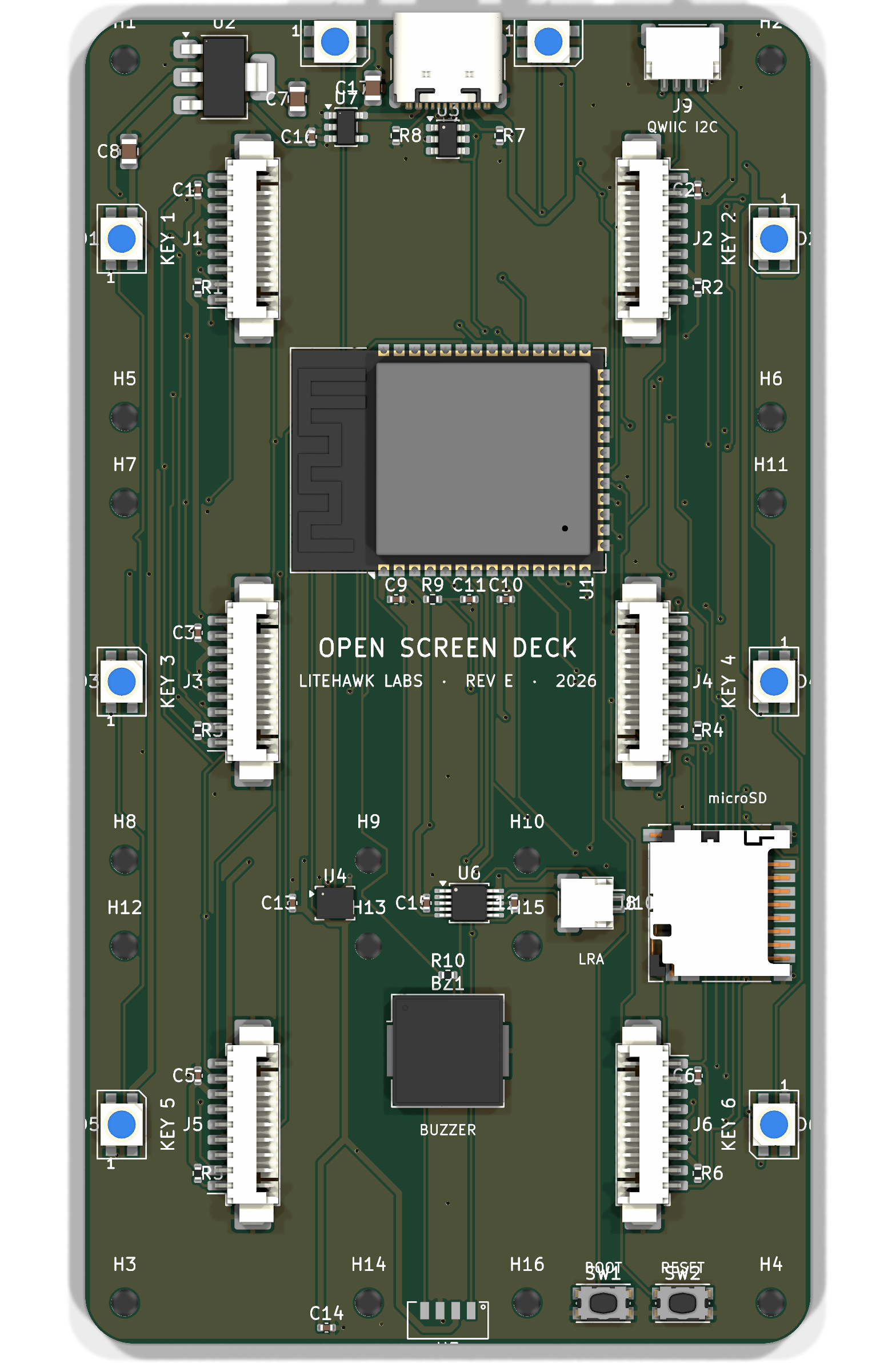
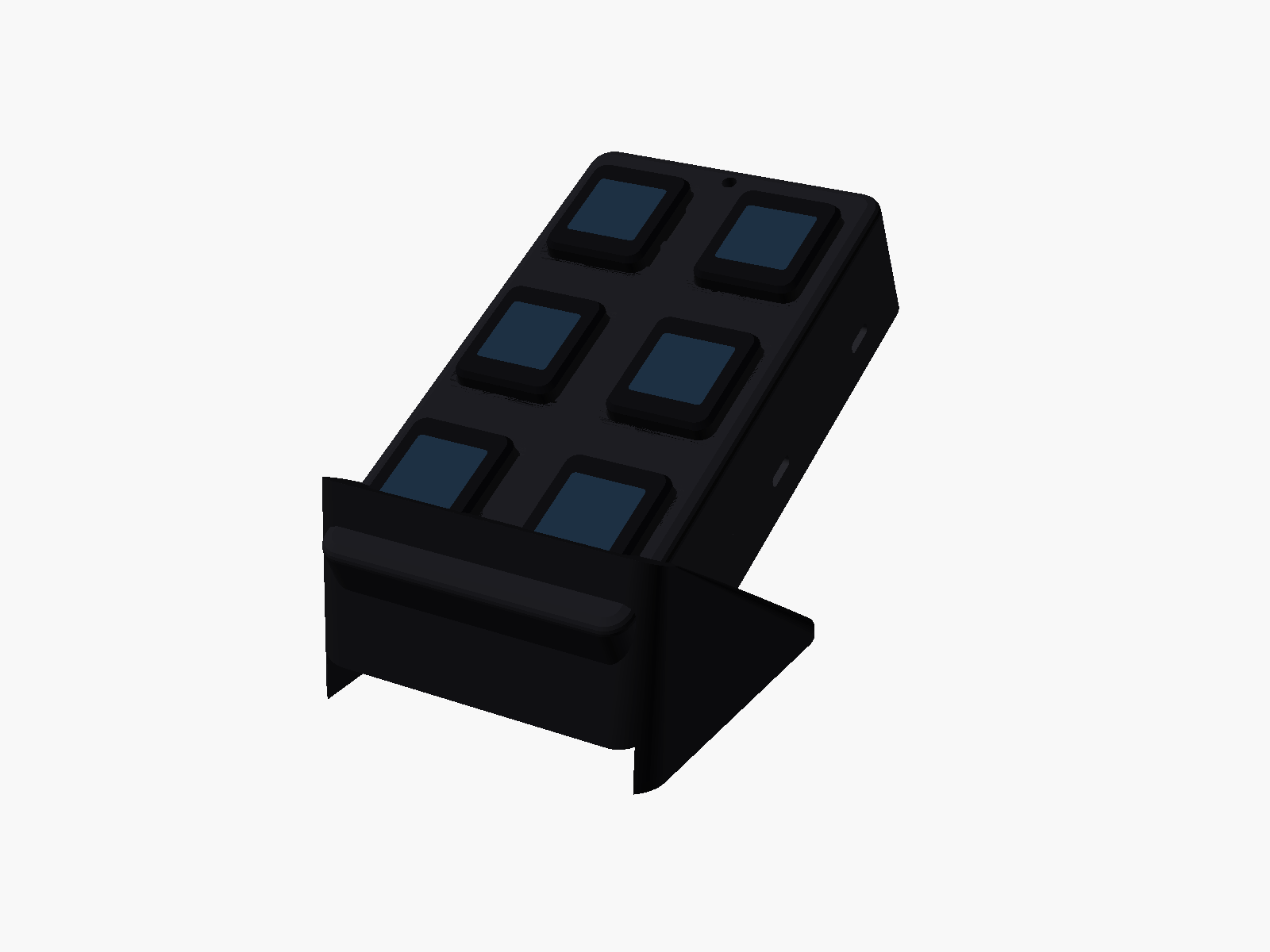
A 2×3 of Waveshare ScreenKey modules (128×128 LCD + switch each) on an ESP32-S3 carrier, in a printed case. You fabricate the board, print the shells, and screw the modules on — sources are in hardware/.
Rev E is the current layout: dual SPI to the panels, IMU, ambient light, haptics, eight edge-glow LEDs, and a Qwiic port.
Specifications
| Keys | 6× Waveshare 0.85″ ScreenKey (SKU 34168) — LCD + mechanical switch in one module |
| Screens | 128×128 IPS per key, ST7735, dual SPI (J1–J3 + SD on bus A, J4–J6 on bus B) |
| MCU | ESP32-S3-WROOM-1-N16R8 (16 MB flash, 8 MB PSRAM) soldered on carrier |
| Carrier PCB | 59.5 × 108.5 mm, 2-layer, ENIG, matte black |
| Sensors | LSM6DS3TR-C IMU (pickup/tap), VEML7700 ambient light (auto-dim) |
| Feedback | DRV2605L haptic driver + LRA jack, piezo, 8× SK6812MINI-E edge glow |
| Expansion | Qwiic / StemmaQT on the shared I2C bus |
| Host link | USB-C → HID keyboard (F13–F24) + CDC serial at 115200 baud |
| Media | microSD for on-device icons/animations, or stream frames over USB |
| Enclosure | v14: 64.9 × 113.9 × 28.2 mm flat deck + optional 25° stand; LED wall windows + ALS light-pipe |
| Fasteners | 4× M2×25 corner screws through module nuts; 12× M2×5 module screws |
Source files
All hardware sources live in the GitHub repo:
| Component | Location |
|---|---|
| Canonical pinout | hardware/pinout.py |
| KiCad schematic + PCB | hardware/pcb/ |
| OpenSCAD enclosure | hardware/enclosure/ |
| Printable STLs | hardware/enclosure/stl/ |
| Fastener / assembly STEP | hardware/3d/ |
| Assembly BOM | hardware/bom_assembly.csv |
Order a PCB
- Generate fab outputs:
./scripts/build_hardware.sh - Upload
hardware/pcb/data_streamdeck_gerbers.zipto JLCPCB (~$15 for five boards) - SMT assembly is recommended on Rev E — IMU, ALS, haptic driver, and eight 3535 LEDs are fiddly by hand. Component list in
hardware/pcb/bom.csv
See the Fab Checklist for pre-order verification and bring-up tests.
Deep dives
- Mechanical contract — enclosure ↔ PCB interfaces, fasteners
- PCB design brief — layout, pinout, sensors, connectors
- ScreenKey module reference — Waveshare SKU 34168 specs
- Product architecture — media storage, dual SPI, I2C